
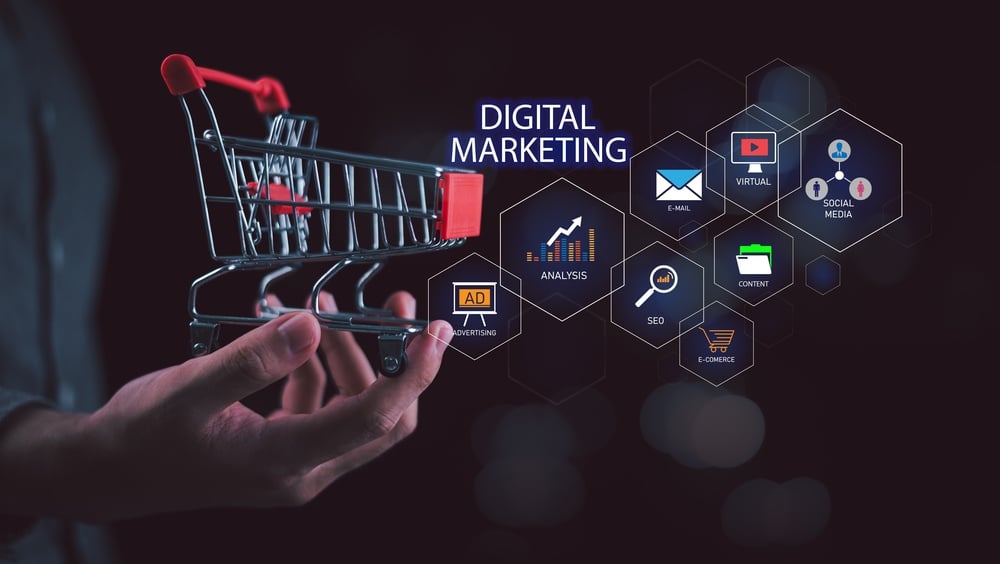
E-commerce Content Marketing
How Content Turns Shoppers Into Customers
E-commerce shoppers rarely move from discovering a brand to completing a purchase in a single step.
They search for answers, compare products, watch demonstrations, read reviews, check specifications, explore social content, and look for reassurance before deciding whether a product deserves their money. Even after the purchase, they may need guidance on setup, use, care, or getting more value from what they bought.
E-commerce content marketing supports that entire journey.
Rather than treating content as a separate publishing activity, e-commerce brands can use it to connect discovery with product education, purchase decisions, and long-term customer relationships. Blog articles are part of that ecosystem, but so are buying guides, videos, product education, user-generated content, email, social media, FAQs, and other resources that help shoppers make informed decisions.
The result is a broader role for content: attracting potential customers is only the beginning.
What Is E-commerce Content Marketing?
E-commerce content marketing is the creation and distribution of useful, relevant content designed to attract potential shoppers, help them understand products and options, support purchase decisions, and maintain engagement after a sale.
Unlike traditional product promotion, content marketing does not need to begin with a direct sales message.
A shopper searching for “how to choose running shoes for long-distance training,” for example, may not yet be looking for a specific model. A useful guide can answer that initial question while introducing the shopper to relevant product categories and giving them a reason to continue exploring the store.
At another point in the journey, that same customer might need a comparison between two products, a demonstration video, sizing information, reviews, or an FAQ before feeling confident enough to buy.
This is what makes e-commerce content marketing broader than blogging. An E-commerce Blog Strategy can help a store capture informational demand and develop useful editorial resources, but content marketing also extends into product pages, category pages, email, video, social platforms, post-purchase communication, and other customer touchpoints.
The objective is to create useful connections between what customers need to know and what the business offers.
Why Content Marketing Matters in E-commerce
An online store cannot rely on a salesperson standing beside every customer to explain a product, answer questions, compare options, or resolve uncertainty.
Content can perform parts of that role throughout the digital buying experience.
Before shoppers know exactly what they want, educational content can introduce problems, solutions, products, and categories. As their interest grows, more detailed resources can help them compare alternatives and understand which option fits their needs.
Closer to the purchase, content can address practical concerns such as product specifications, compatibility, sizing, use cases, delivery, returns, or other factors that may influence the decision.
The value continues after checkout. Instructions, tutorials, product-care information, FAQs, and follow-up communication can help customers understand how to use what they purchased and maintain their relationship with the brand.
This gives e-commerce content marketing several potential roles at once: supporting organic discovery, educating shoppers, building familiarity with the brand, reducing uncertainty around a purchase, and encouraging continued engagement.
Content becomes especially valuable when it answers questions that would otherwise remain between the shopper and the sale.
E-commerce Content Marketing Goes Beyond the Blog
Blogs are one of the most familiar forms of content marketing because they allow brands to address informational searches, explain topics in depth, and build a library of useful resources over time. But an e-commerce content ecosystem should not stop there.
A buying guide can help someone understand which product fits a particular need. A comparison can clarify differences between similar options. A demonstration video can show something that would be difficult to communicate through product copy alone. User-generated content can show products in real-world contexts, while email can reconnect with customers after they leave the website. Even product and category pages are part of the content experience.
Descriptions, specifications, images, videos, reviews, FAQs, and supporting information all influence whether shoppers understand what they are buying and whether the product appears appropriate for their needs.
This means content should not be viewed only as material created to generate traffic. In e-commerce, it can exist anywhere information helps move the customer toward a clearer decision.
A broader SEO Content Strategy can help connect those resources around search demand and user needs, but e-commerce content also needs to work beyond organic search. The same customer may encounter a brand through Google, continue researching on social media, return through email, and ultimately convert directly on the store.
Content connects those interactions even when they happen across different channels.
How Content Supports the E-commerce Customer Journey
The e-commerce customer journey is rarely perfectly linear. A shopper might discover a product through a search result, leave, encounter the brand again through social media, read a buying guide several days later, compare products, subscribe to an email list, and eventually return to make a purchase.
Content can support each of those moments without requiring every piece to accomplish the same objective.
At the beginning of the journey, the priority may be helping potential customers discover a problem, category, or solution. During consideration, content can help them evaluate alternatives and understand differences. Near the purchase, it can reduce unanswered questions that create hesitation.
After the transaction, the role changes again. Content can help customers use the product successfully, discover additional value, and maintain a relationship with the brand.
A useful way to understand the role of e-commerce content is through four broad stages:
Attract: Help potential customers discover the brand and its product category.
Engage: Give interested shoppers useful information that helps them explore their options.
Convert: Address questions and uncertainty that can influence a purchase decision.
Retain: Continue providing value after the transaction and encourage an ongoing customer relationship.
These stages are not a rigid funnel that every shopper follows in order. They provide a framework for understanding why different content formats serve different needs.
Attract: Help Potential Customers Discover the Brand
Content can introduce an e-commerce brand before a shopper begins searching for a specific product. This is particularly valuable for informational searches.
Someone shopping for home office equipment, for example, may begin with a question about improving ergonomics rather than a search for a particular chair, desk, or accessory. Content addressing that initial need can create an entry point into the product category.
Blog posts are particularly useful here, but they are not the only option. Educational videos, social content, infographics, podcasts, creator collaborations, and other discovery-focused formats can introduce the brand while addressing topics its potential customers already care about. The goal at this stage is not necessarily to force an immediate transaction.
A shopper who is still learning may need context before product recommendations become useful. Content can provide that context and create natural paths toward relevant categories, products, or additional resources when the customer is ready to explore further.
This is also where e-commerce content and organic search can work together effectively. Product pages tend to target shoppers who already have stronger commercial intent, while informational content can expand the range of searches through which a brand can be discovered earlier in the decision process.
That earlier connection gives the business an opportunity to become part of the customer’s consideration before the final product search begins.
Engage: Help Shoppers Understand Their Options
Once potential customers become interested, their questions usually become more specific.
They may want to understand the differences between product types, determine which features matter, compare alternatives, see a product in action, or decide whether an option fits their particular situation. Content at this stage should help shoppers evaluate rather than simply attract attention.
Buying guides are particularly effective because they can explain the criteria customers should consider before choosing. Comparison content can make differences between products easier to understand, while videos can demonstrate size, functionality, appearance, setup, or real-world use.
Interactive content can also help when a product category contains many options. Quizzes, selectors, calculators, or recommendation tools can turn general interest into a more personalized exploration when they genuinely help customers narrow their choices.
The product itself should also become increasingly visible as the shopper moves deeper into consideration. Educational content can connect naturally with relevant products without turning every interaction into an advertisement.
Useful content helps customers understand why one option may suit them better than another. Promotional content simply tells them what the brand wants them to buy.
For e-commerce brands, the strongest content often succeeds because it makes the decision easier before asking the customer to make it.
Convert: Use Content to Reduce Purchase Uncertainty
As shoppers move closer to a purchase, their information needs change again.
They may already understand the category and have narrowed their options, but unanswered questions can still create hesitation. Is the product compatible with something they already own? Which size should they choose? What is included? How does one model compare with another? What happens if the product does not meet their expectations?
Content near the point of purchase should make those decisions easier.
Detailed product information, comparison pages, demonstrations, customer reviews, user-generated content, FAQs, shipping details, and clear return information can all help shoppers evaluate whether a product fits their needs.
The objective is not simply to add more information to the page. Content needs to address the questions that matter at that stage of the decision.
Too little information can leave shoppers uncertain. Too much poorly organized information can make the decision harder. Effective e-commerce content gives customers the context they need without forcing them to search across multiple pages for basic answers.
This is where content and conversion become closely connected. A shopper who understands the product, its use, and what to expect after purchasing is in a better position to make an informed decision.
Retain: Content Does Not End After the Purchase
A completed transaction does not eliminate the customer’s need for information. After purchasing, customers may need help setting up a product, learning how to use it, maintaining it, troubleshooting common issues, or discovering features they did not initially know about.
Post-purchase content can address those needs. Tutorials, care instructions, onboarding emails, FAQs, help documentation, videos, and educational resources can make it easier for customers to get value from what they purchased.
This stage also creates opportunities for continued engagement. A brand might introduce complementary products when they are genuinely relevant, invite customers to share their experiences, or provide useful ideas for getting more from an existing purchase.
The emphasis should remain on usefulness rather than immediately turning every post-purchase interaction into another sales pitch.
When content continues solving problems after checkout, the relationship between the customer and the brand can extend beyond a single transaction.
Effective Types of Content for E-commerce
There is no single content format that works for every e-commerce business or every stage of the customer journey.
The right format depends on what customers need to understand and where they are likely to encounter the information.
Blog and editorial content can address informational searches, explain broader topics, introduce product categories, and answer questions that begin before shoppers have decided what to buy.
Buying guides and comparison content help customers evaluate options by explaining relevant features, differences, use cases, and considerations.
Product and category content provides the information closest to the transaction, including descriptions, specifications, imagery, demonstrations, compatibility information, and other details necessary to understand an offer.
Video content can demonstrate products in ways static copy cannot, particularly when appearance, movement, installation, scale, or real-world use influences the decision.
User-generated content can provide additional context by showing how customers use products in real situations. Reviews, customer photos, and other contributions can also give prospective buyers perspectives beyond the brand’s own description.
Email content can support multiple stages of the relationship, from educational communication and product discovery to abandoned-cart messaging, post-purchase guidance, and continued customer engagement.
Social content can help brands participate in discovery, demonstrate products, answer questions, highlight customer experiences, and maintain regular interaction with their audience.
Interactive content, including quizzes, selectors, calculators, and recommendation tools, can be useful when shoppers need help narrowing a large or complex set of options.
Help content and FAQs become particularly valuable when customers repeatedly encounter the same questions before or after purchasing.
The strongest e-commerce content mix is therefore not necessarily the one using the most formats. It is the one that gives customers useful information in formats appropriate to the decisions they are trying to make.
Content Marketing Can Strengthen Organic Discovery
E-commerce SEO does not begin and end with product and category pages. Those pages are essential for searches with strong commercial or transactional intent, but potential customers often begin much earlier with informational questions. Content marketing gives e-commerce websites opportunities to address those searches.
An educational article might introduce someone to a product category. A buying guide can capture searches from users comparing different solutions. A detailed comparison can reach shoppers who have narrowed their options but have not yet chosen a product.
Together, these resources can expand the range of relevant queries through which an e-commerce website can be discovered.
Content can also create stronger relationships between informational and commercial areas of the site. Relevant internal links can guide users from educational resources toward categories and products while helping search engines understand how related pages connect.
This is where Keyword Research and Optimization can support e-commerce content by identifying the questions, topics, and search intents surrounding a product category rather than focusing exclusively on transactional keywords.
The objective is not to create articles around every keyword available. Content should address meaningful customer needs and create a logical connection between search demand and what the business can genuinely help users discover, understand, or purchase.
Content Can Reduce Friction Before and After the Sale
Many e-commerce obstacles are information problems. A customer may hesitate because a product description does not explain compatibility. Another may abandon a decision because sizing is unclear. Someone who has already purchased may contact customer support because setup instructions are difficult to find.
Content cannot eliminate every source of friction, but it can address uncertainty that comes from missing, unclear, or difficult-to-find information.
Before a purchase, this may mean providing better specifications, demonstrations, comparisons, FAQs, shipping information, or explanations of how a product should be used.
After a purchase, it can mean accessible setup instructions, care guidance, troubleshooting resources, and answers to recurring questions.
These resources can also help customers develop more realistic expectations about a product before buying it. When people understand what a product does, what it does not do, and whether it fits their needs, they can make better-informed purchase decisions.
That makes content valuable beyond traffic acquisition. It becomes part of the overall customer experience surrounding the transaction.
From Customer to Brand Advocate
The most valuable customer relationship does not necessarily end with a repeat purchase. Customers can also become contributors to the content ecosystem itself.
Reviews, photos, videos, testimonials, social posts, questions, and other forms of user-generated content can show prospective buyers how products perform outside the brand’s own marketing materials.
For existing customers, participating in that ecosystem can create another reason to remain connected with the brand.
This does not mean every customer will become an advocate, nor should brands assume that user-generated content will always be positive. Its value comes partly from representing experiences and perspectives that are different from the company’s own promotional voice.
Brands can support participation by making it easy for customers to leave useful reviews, share experiences, ask questions, or contribute content where appropriate.
Over time, content can therefore move in both directions. The brand provides information that helps customers discover, evaluate, purchase, and use products, while customers can contribute experiences that help other shoppers make their own decisions.
That cycle can turn content marketing from a publishing activity into part of the broader relationship surrounding the brand.
What is e-commerce content marketing?
E-commerce content marketing is the creation and distribution of useful content designed to attract potential customers, educate shoppers, support purchase decisions, and maintain engagement after a sale.
It can include blog posts, buying guides, videos, product education, email, social content, user-generated content, FAQs, and other resources that support the customer journey.
What is the difference between e-commerce content marketing and blogging?
Blogging is one component of e-commerce content marketing.
A blog typically focuses on editorial and informational content, while e-commerce content marketing includes a wider range of customer touchpoints, such as product and category content, buying guides, video, email, social media, user-generated content, interactive resources, and post-purchase education.
Why is content marketing important for e-commerce?
Content marketing can help e-commerce brands reach customers before they begin searching for a specific product, explain complex purchase decisions, answer common questions, and provide useful information throughout the customer relationship.
It can support organic discovery while also helping shoppers move from initial research toward a more informed purchase.
What types of content work for e-commerce?
Useful formats can include blog posts, buying guides, product comparisons, product and category content, videos, user-generated content, email, social media, interactive tools, tutorials, and FAQs.
The appropriate format depends on the audience, product, channel, and stage of the customer journey.
How does content marketing support e-commerce SEO?
Content marketing can expand the range of relevant searches an e-commerce website can address beyond product and category keywords.
Informational articles, buying guides, comparisons, and other resources can target questions and topics that appear earlier in the customer journey while creating internal pathways toward relevant commercial pages.
Can content marketing help retain e-commerce customers?
Yes. Content can continue providing value after a purchase through onboarding, tutorials, care instructions, troubleshooting resources, FAQs, product education, and relevant follow-up communication.
Post-purchase content can help customers use their products successfully while creating additional opportunities for continued engagement with the brand.
Why MRKT360 for E-commerce Content Marketing
Effective e-commerce content needs to connect customer needs with business objectives without treating every interaction as an immediate sales opportunity.
At MRKT360, content marketing can work alongside SEO and broader digital marketing efforts to help e-commerce businesses create relevant touchpoints throughout the customer journey. The appropriate mix depends on the audience, products, competitive environment, search opportunities, and channels involved.
That may include educational resources for discovery, content that supports product consideration, search-focused assets, or information that helps customers before and after a transaction.
The goal is to create a connected content ecosystem in which each asset has a clear purpose and contributes to a more useful digital shopping experience.
Key Takeaway
E-commerce content marketing is much more than publishing blog posts to generate traffic. Content can support shoppers from their first question through product research, comparison, purchase, and post-purchase experience. Different formats serve different purposes: educational content can create discovery, buying guides can support consideration, product information can reduce uncertainty, and post-purchase resources can help customers get more value from what they bought.
The strongest e-commerce content ecosystems recognize that customers do not experience content in isolation. A search result, article, video, product page, email, review, and FAQ can all become part of the same decision journey.
For e-commerce brands, that creates an opportunity to make content useful at every stage, not simply as a way to attract an audience, but as a way to help shoppers understand products, make informed decisions, and continue engaging after the sale.
Strategy That Works
Why Businesses Trust Us

Partnership Mentality
We treat your business like our own, aligning strategy with your long-term vision and growth goals.

Accountability First
We stand behind our work. Clear reporting, clear expectations, and a commitment to continuous improvement.

Transparent Communication
You always know what we’re doing, why we’re doing it, and how it’s performing. No confusion. No hidden tactics. Just clarity.