
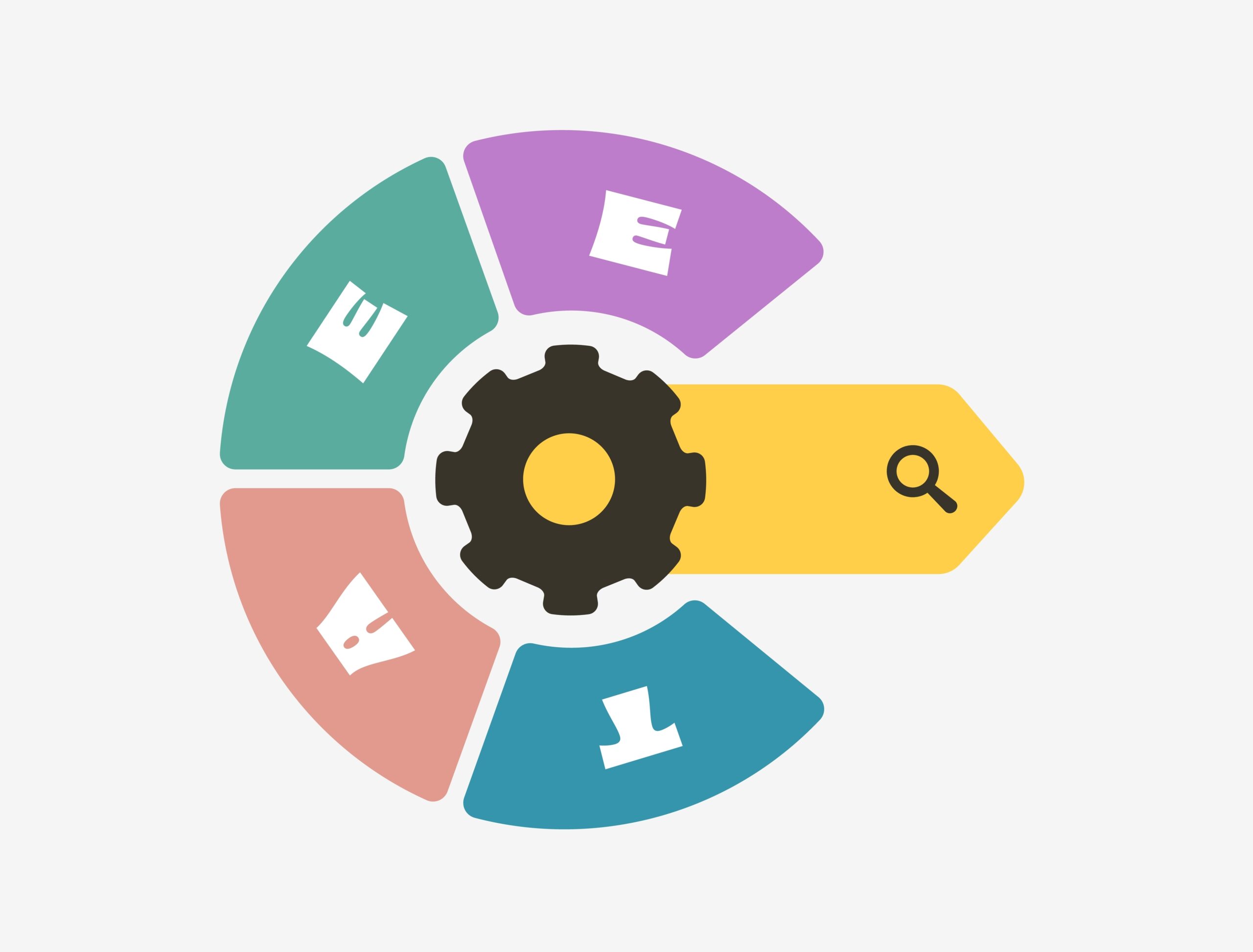
E-E-A-T and User Experience
How UX Reinforces Trust and Credibility
Trust is not created by content alone. A website may publish accurate information written by qualified experts, but visitors still evaluate dozens of other details before deciding whether they believe what they see.
Can they tell who is behind the information? Is the content easy to navigate and understand? Does the website behave as expected? Can important claims be traced back to reliable sources? Does the overall experience feel transparent?
This is where E-E-A-T and user experience intersect.
Experience, Expertise, Authoritativeness, and Trustworthiness describe qualities associated with credible information and sources. User experience determines how effectively people can discover, understand, and evaluate many of those qualities when interacting with a website.
The relationship matters because credibility has to be communicated through the entire digital experience. Strong E-E-A-T may establish why a source deserves attention, while thoughtful UX can make the evidence behind that credibility easier for users to recognize.
Where E-E-A-T and User Experience Connect
E-E-A-T and UX address different aspects of a website, but they frequently meet at the same point: user confidence.
E-E-A-T focuses on qualities surrounding the content and its source, including firsthand experience, relevant expertise, established authority, and trustworthiness. UX focuses on how people interact with the website that delivers that information.
One does not replace the other.
A fast, attractive website cannot compensate for inaccurate or unreliable content. In the same way, excellent information can become harder to evaluate when it is presented through a confusing or frustrating experience.
This distinction is particularly important when considering E-E-A-T and SEO. Search visibility may introduce users to a source, but the experience that follows can influence whether they understand the information, recognize its credibility, and feel confident continuing their relationship with the website.
UX therefore acts as part of the environment in which E-E-A-T is perceived. It helps make credibility visible rather than leaving users to search for the evidence themselves.
Good Information Can Lose Credibility Through Poor UX
Imagine arriving at an article written by a genuine industry expert. The information is accurate and thoroughly researched, but the page is difficult to read, navigation is confusing, intrusive elements repeatedly cover the content, and it is unclear where supporting information comes from.
The expertise behind the page has not disappeared. The user’s ability to recognize and trust it, however, may be weakened.
This is one of the most important connections between E-E-A-T and UX. Credibility depends not only on what information exists but also on whether people can understand where it comes from and evaluate it without unnecessary obstacles.
Poor readability can make complex information harder to interpret. Broken functionality can make a website feel neglected. Confusing navigation can prevent visitors from finding information about the organization behind the content. An unclear hierarchy can make supporting evidence difficult to distinguish from opinion or promotional messaging.
These issues should not be interpreted as direct E-E-A-T penalties. Google does not assign a website a lower E-E-A-T score because its navigation is confusing. Instead, poor UX can undermine the practical value of credible information and affect how users experience the source behind it.
The result is a disconnect: the website may possess expertise, but its interface does not communicate that expertise effectively.
Trust Is Built Through the Entire Website Experience
Users rarely evaluate credibility based on a single paragraph. They interpret a collection of signals across the entire website.
A visitor reading an article may want to understand who published it. Someone considering a purchase may look for information about the business, policies, payment process, or customer support. A potential client may want to confirm that the company is legitimate before providing personal information through a form.
Each interaction contributes to the perception of trust.
This makes transparency an important connection between E-E-A-T and UX. Information about authors, organizations, policies, sources, and contact options becomes more valuable when users can actually find and understand it.
Consistency matters as well. When information, navigation, branding, and functionality behave predictably across a website, users have fewer reasons to question whether something is legitimate. When important information is hidden, contradictory, or unnecessarily difficult to locate, uncertainty increases.
Trustworthiness is central to how E-E-A-T affects SEO, but from a UX perspective, trust is also something users continuously reassess as they move through a website.
A credible digital experience therefore extends beyond publishing accurate content. It creates an environment in which users can verify who they are interacting with, understand what is being offered, and make informed decisions about what to do next.
UX Helps Users Recognize Expertise
Expertise only creates value when people can identify it.
A business may employ experienced professionals, publish original research, or have years of specialized knowledge behind its content. If those qualities are disconnected from the pages users encounter, much of that credibility can remain invisible.
UX can help bridge that gap by giving context to information.
When authorship is clear, users can understand who is speaking. When relevant qualifications or professional backgrounds are accessible, readers can evaluate whether that person has appropriate knowledge of the subject. When evidence and sources are presented clearly, claims become easier to examine.
The objective is not to decorate a page with credentials. It is to give users enough context to understand why the information deserves their confidence.
This becomes especially important when expertise cannot be evaluated from the content alone. A technical recommendation from an identifiable specialist carries a different context from the same recommendation published anonymously with no indication of how it was developed.
Good UX makes these distinctions easier to recognize without interrupting the reading experience. In that sense, design and information architecture become a delivery layer for expertise: they organize the evidence surrounding the content so users can evaluate it for themselves.
Content Design Can Strengthen, or Weaken, Authority
Authority is often discussed in terms of external recognition, such as links, citations, mentions, and reputation. Once users arrive on a website, however, content design influences how effectively that authority is communicated.
A well-structured page gives readers a clear path through the information. Headings establish relationships between ideas, supporting evidence provides context for claims, and internal navigation allows users to explore related expertise without losing their place.
These elements do more than make an article easier to scan. They help users understand the depth and organization of the knowledge behind it.
A website with extensive expertise can still feel fragmented if related information is disconnected across isolated pages. Conversely, a clear content architecture can show how individual resources contribute to a larger body of knowledge.
This is where UX can complement SEO Content Architecture. Internal relationships between pages help organize information for search engines, but they can also help users discover additional context, move naturally between related topics, and understand the breadth of a brand’s expertise.
Content design does not create authority by itself. What it can do is make existing authority easier to discover, navigate, and evaluate.
When credible information, evidence, expertise, and related resources are presented as part of a coherent experience, users gain a clearer picture of why the source deserves their attention.
Friction Can Become a Trust Problem
Not every usability problem is a credibility problem. But when friction makes users question a website’s intentions, legitimacy, or reliability, UX and trust begin to overlap.
Consider an article repeatedly interrupted by aggressive pop-ups, a form requesting more personal information than seems necessary, or a button whose wording does not clearly explain what will happen after it is clicked. Each interaction introduces uncertainty that has little to do with the quality of the original content.
The same can happen when advertisements overwhelm the main information, important details are hidden behind unnecessary interactions, or users encounter unexpected redirects and broken functionality. Individually, these issues may appear to be usability problems. Together, they can change how visitors perceive the organization behind the website.
This is particularly relevant to trustworthiness. Users need to feel that a website behaves in ways they can understand and anticipate. Interfaces that create confusion or appear manipulative can make even legitimate businesses seem less dependable.
Reducing friction is therefore not simply about making a website more convenient. In situations where users are evaluating credibility, the experience itself can influence whether they feel comfortable trusting the information or taking the next step.
Why E-E-A-T and UX Matter More for High-Trust Decisions
The relationship between E-E-A-T and UX becomes more significant as the consequences of a user’s decision increase.
Someone reading an entertainment article may tolerate a certain amount of uncertainty about the publisher. Someone considering financial guidance, evaluating medical information, choosing a legal service, or entering payment details has much stronger reasons to examine the source carefully.
In these situations, users may look beyond the information itself. They may want to know who created it, whether the organization is legitimate, what evidence supports important claims, and what will happen if they provide personal or financial information.
UX influences how easily those questions can be answered.
A confusing experience can introduce doubt at exactly the moment when confidence matters most. Clear information and predictable interactions, on the other hand, allow users to focus on evaluating the substance of the content and the organization behind it.
The required level and type of credibility will depend on the context. A medical resource and an ecommerce product page do not require identical evidence or expertise. What they share is the need to provide users with enough information to make an informed decision without unnecessary uncertainty.
This is why high-trust journeys make the connection between E-E-A-T and UX particularly visible. As the potential impact of a decision increases, credibility becomes more than an abstract quality of the content. It becomes part of the experience itself.
E-E-A-T, UX, and the Changing Search Journey
The search journey is becoming more complex as users discover information through traditional results, featured search experiences, and AI-generated answers.
In some cases, users may encounter information about a brand before ever visiting its website. An AI-generated response may summarize a topic and provide supporting sources, while a conventional search result may introduce the same organization through a page title and description.
But earning that initial visibility does not complete the journey.
Once users reach the website, they still need to determine whether the source deserves their confidence. The transition from search experience to website experience therefore creates an important connection between E-E-A-T and UX.
This distinction matters for SEO for AI Search as well. AI-powered discovery can change how users encounter brands and information, but it does not eliminate the need for a credible destination. When users follow a source to learn more, compare options, verify a claim, or make a decision, the website becomes responsible for continuing the trust established during discovery.
The search interface may introduce the source. The website experience helps users decide what that source is worth.
As search continues to evolve, businesses therefore need to think beyond simply appearing in results. Visibility can create an opportunity for interaction, but UX influences what happens once that opportunity reaches the website.
Credibility Doesn’t End at the Search Result
SEO is often evaluated by what happens before the click: rankings, impressions, search features, and organic visibility. E-E-A-T and UX reveal why the experience after the click deserves equal attention.
A high-ranking page can attract visitors, but ranking alone cannot make them trust a company. In the same way, strong authority may help establish a brand’s reputation, but users still evaluate that reputation through every interaction they have with its website.
This creates a simple relationship between search and experience:
Search visibility earns the visit. The website experience helps earn the trust.
That trust can influence whether visitors continue reading, explore additional pages, contact the business, complete a purchase, or return in the future. It can also shape their broader perception of the brand beyond the individual page that originally brought them to the site.
E-E-A-T and UX therefore should not be treated as interchangeable concepts. They address different questions. E-E-A-T helps explain why a source and its information may deserve credibility. UX determines how effectively users can access, understand, and evaluate that credibility throughout their journey.
The strongest digital experiences align the two.
How are E-E-A-T and user experience connected?
E-E-A-T and UX are connected through credibility and user confidence. E-E-A-T describes qualities associated with trustworthy content and sources, while UX affects how easily visitors can recognize, understand, and evaluate those qualities when using a website.
Good UX does not create expertise or authority on its own. It can, however, make evidence of expertise, transparency, authorship, and reliability easier for users to find and assess.
Does UX affect E-E-A-T?
UX is not one of the four components of E-E-A-T, and improving usability does not directly increase an E-E-A-T score because Google does not assign websites such a score.
However, UX can influence how effectively a website communicates qualities associated with E-E-A-T. Clear navigation, understandable content organization, transparency, and predictable interactions can make it easier for visitors to evaluate the credibility of a source.
Can poor UX hurt website credibility?
Yes. Poor UX can create uncertainty even when the underlying content is accurate.
Broken functionality, confusing navigation, intrusive elements, unclear calls to action, or difficult-to-find information can make users question the quality or legitimacy of a website. The effect depends on the context, but friction becomes particularly important when visitors are expected to provide information, spend money, or make high-stakes decisions.
Why is trust important in user experience?
Trust gives users confidence to continue interacting with a website. Visitors need to understand who they are dealing with, what information they can rely on, and what will happen when they take an action.
Without that confidence, even a technically functional website can struggle to move users from information discovery toward deeper engagement or conversion.
Does page experience affect SEO?
Page experience can matter to SEO, but it should not be treated as a substitute for relevance or high-quality content. Google considers several aspects of the experience users receive on a page, while its ranking systems also evaluate many other signals when determining search results.
From an E-E-A-T perspective, the important distinction is that page experience and credibility can complement one another without being the same thing. A usable website does not automatically become authoritative, just as authoritative content does not guarantee a good website experience.
How does website design influence trust?
Website design can influence trust by affecting how easily users understand information, identify the organization behind a site, navigate between resources, and predict what will happen when they interact with an element.
Design alone cannot establish expertise or authority. Its role is to create an environment where legitimate credibility is communicated clearly rather than obscured by confusion, inconsistency, or unnecessary friction.
How MRKT360 Connects SEO, Content, and User Experience
Search performance does not exist independently from the experience users have after reaching a website. Content, technical performance, information architecture, credibility, and usability all contribute to how effectively a digital presence supports both discovery and business objectives.
At MRKT360, we consider these elements as connected parts of a broader digital strategy. This means looking beyond rankings alone to understand how users discover information, interact with content, evaluate a brand, and move toward meaningful actions.
As search experiences continue to evolve, connecting SEO with the quality of the website experience can help businesses build digital journeys that are easier to discover, understand, and trust.
Key Takeaway
E-E-A-T and user experience meet where credibility becomes something users actually experience.
Expertise, authority, and trustworthy information may give a website strong foundations, but users still need to recognize those qualities as they navigate its pages, evaluate claims, interact with features, and decide whether to take action.
UX does not manufacture E-E-A-T, nor does good design guarantee stronger search rankings. What it can do is remove barriers between credible information and the people trying to evaluate it.
As search journeys expand across traditional results and AI-powered discovery, that relationship becomes increasingly important. Getting discovered creates the opportunity. Creating an experience people can understand and trust determines what happens next.
Strategy That Works
Why Businesses Trust Us

Partnership Mentality
We treat your business like our own, aligning strategy with your long-term vision and growth goals.

Accountability First
We stand behind our work. Clear reporting, clear expectations, and a commitment to continuous improvement.

Transparent Communication
You always know what we’re doing, why we’re doing it, and how it’s performing. No confusion. No hidden tactics. Just clarity.